
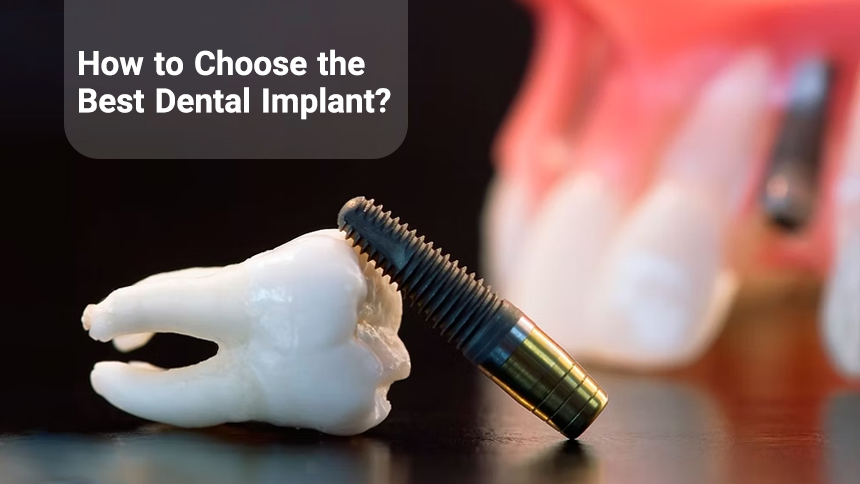
How to Choose the Best Dental Implant?
Dental implants have been recognized in recent decades as the gold standard for replacing missing teeth. Advances in technology, improvements in implant design, and increased scientific knowledge have led to implant treatment success rates of more than 95 percent in many studies today. However, treatment success does not depend solely on implant quality; selecting the appropriate implant system based on each patient’s individual conditions plays a decisive role in achieving optimal results.
When selecting an implant, the dentist must simultaneously evaluate a range of factors, including the patient’s general health, bone quality, implant placement site, aesthetic requirements, occlusal conditions, type of prosthesis, implant brand, and even the patient’s budget. Choosing an unsuitable system may increase the risk of treatment failure, bone loss, inflammation of the tissues surrounding the implant, and additional costs.
In this article, we review the most important factors a dentist should consider when selecting the appropriate implant for a patient.
The Importance of Choosing the Right Dental Implant
Although all dental implants are designed to replace the tooth root, they do not all perform in the same way. Differences in thread design, prosthetic connection type, body material, implant surface quality, and manufacturing technology can affect the osseointegration process, treatment longevity, and patient satisfaction. Therefore, implant selection should not be based solely on price or brand reputation, but should be tailored to each patient’s individual condition.
1) Evaluation of the Patient’s General Health
The first step in implant selection is a comprehensive evaluation of the patient’s medical condition. Certain diseases and conditions can interfere with bone healing, including uncontrolled diabetes, osteoporosis, cardiovascular disease, autoimmune disorders, immune system deficiencies, a history of radiotherapy in the jaw region, long-term use of bisphosphonates, and the use of immunosuppressive medications. The presence of these conditions does not necessarily contraindicate treatment, but it may affect the choice of implant type or treatment plan.
2) Patient Age
Age alone is not an appropriate criterion for accepting or rejecting implant treatment, but jawbone growth must be complete. In elderly patients, bone quality and general health are more important than chronological age.
3) Jawbone Quality
One of the most important factors in implant success is bone quality and density. Using three-dimensional radiography (CBCT), the dentist evaluates factors such as bone density, bone height, bone width, the position of the maxillary sinus, and the location of the inferior alveolar nerve. If sufficient bone is not available, treatments such as bone grafting, sinus lift, or bone reconstruction may be performed before implant placement.
4) Bone Volume
Sometimes bone quality is adequate, but its volume is insufficient. In such cases, options such as Short Implants, Narrow Implants, Bone Grafting, and Guided Bone Regeneration (GBR) become important.
5) Implant Placement Site
The area where the implant is placed plays an important role in selecting the appropriate system. In the anterior region, aesthetics is the most important factor. Implants with a narrower design that help preserve crestal bone and provide better aesthetic results are commonly used in this area. In the posterior region, chewing forces are significantly greater. Therefore, implants with larger diameters are usually selected.
6) Occlusal Conditions
The way the teeth contact each other is highly important. Conditions such as teeth grinding, bruxism, excessive lateral forces, and occlusal irregularities should be evaluated. In these patients, stronger implants and more appropriate designs are generally selected.
7) Number of Missing Teeth
The choice of implant system also depends on the number of teeth that need to be replaced. For example, a single tooth, multiple teeth, complete edentulism, and overdentures each require a different treatment design.
8) Implant Design
Not all implants have the same design. Differences include thread design, body shape, diameter, length, connection type, and apex design. These features affect primary stability and treatment success.

9) Implant Material
Most implants are made from pure titanium or titanium alloys, which have very high biocompatibility. In recent years, zirconia implants have also attracted attention for patients with aesthetic concerns or sensitivity to metals, although titanium remains the most common choice in many treatments.

10) Implant Surface Technology
The implant surface plays an important role in the process of osseointegration, or the direct attachment of bone to the implant. Common surface technologies include SLA, RBM, TiUnite, Sandblasted, and Acid Etched surfaces. Advanced surfaces generally accelerate the process of bone integration.
11) Implant Connection Type
The connection between the implant and abutment is highly important. The most common systems include internal connections, external connections, and conical connections (Cone Morse). Conical connections generally provide greater stability and reduce the possibility of bacterial penetration.
12) Choosing the Right Brand
One of the most important decisions for a dentist is choosing the implant brand. A reputable brand generally has the following characteristics:
- Long-term scientific studies
- High manufacturing quality
- Strict quality control
- International standards
- Wide range of prosthetic components
- After-sales service
- Easy access to components
- A successful track record in the global market
13) Standards and Certifications
Before selecting an implant, the presence of recognized standards and approvals such as European CE marking, U.S. FDA approval (if marketed in that market), ISO 13485, and ISO 14801 (fatigue testing for dental implants) should be verified.
14) Ease of Use for the Dentist
The implant system should include a complete surgical kit, precision instruments, instruction manuals, appropriate training, and readily available components.
15) Future Availability of Components
One common mistake is choosing brands whose components are no longer available in the market after several years. If an abutment needs to be replaced or a new prosthesis must be fabricated, the lack of available components can complicate treatment.

16) Patient’s Financial Conditions
Treatment cost is also an important factor in selecting an implant system. However, choosing solely based on price is not recommended, because lower quality may result in greater costs in the future.
17) Patient Expectations
Some patients place greater importance on aesthetics, some prioritize long-term durability, and others seek faster treatment. A detailed discussion with the patient and understanding their expectations can help in selecting the best treatment plan.
18) Dentist’s Experience and Skill
Even the best implant cannot guarantee treatment success without proper planning and precise execution. The dentist’s experience in selecting the appropriate system, evaluating the patient’s condition, and performing the surgery plays a decisive role in the final outcome.
Common Mistakes in Implant Selection
Certain mistakes can increase the risk of treatment failure, including:
- Choosing an implant solely based on price
- Ignoring bone quality
- Using systems without sufficient scientific evidence
- Ignoring the patient’s aesthetic requirements
- Choosing an inappropriate implant diameter or length
- Failing to evaluate the patient’s general health
- Using brands with limited component availability
Conclusion
Selecting the appropriate implant is one of the most important decisions in implantology treatment and requires a careful assessment of each patient’s clinical, anatomical, and individual conditions. Before beginning treatment, the dentist should thoroughly evaluate the patient’s general health, bone quality and volume, the location of the missing tooth, occlusal conditions, aesthetic requirements, type of prosthesis, and patient expectations. In addition, choosing a reputable brand with scientific support, international standards, high manufacturing quality, and reliable access to components plays an important role in the long-term success of treatment.
Ultimately, no single implant brand or system can be considered the best option for every patient. The best choice is a system that most closely matches the patient’s individual conditions, the dentist’s experience, and the treatment objectives. Evidence-based decision-making, the use of standardized equipment, and precise treatment planning not only increase the likelihood of implant success but also improve function, aesthetics, and long-term patient satisfaction.
References
Misch CE. Dental Implant Prosthetics. 2nd Edition. Elsevier; 2015
Carl E. Misch. Contemporary Implant Dentistry. 4th Edition. Elsevier; 2020
Lindhe J, Lang NP. Clinical Periodontology and Implant Dentistry. 7th Edition. Wiley-Blackwell; 2022
Albrektsson T, Brånemark PI, et al. Osseointegrated Titanium Implants: Requirements for Ensuring a Long-Lasting, Direct Bone-to-Implant Anchorage. Acta Orthopaedica Scandinavica
Leave a Comment
We appreciate you sharing your feedback and helping us continuously improve the quality of our services.
* Your email address will only be used to respond to you and will not be published.