
Difference Between Silicone-Coated Latex Foley Catheters and 100% Silicone Foley Catheters
A Foley catheter is one of the most widely used medical devices in treatment centers, hospitals, operating rooms, and even home care. It is used to drain urine from the bladder in patients who, for any reason, are unable to urinate naturally or whose urine output needs to be monitored accurately. Due to its special design, a Foley catheter can remain inside the bladder for a specified period and, unlike temporary catheters, does not need to be removed immediately after urine drainage.
Although most Foley catheters look similar, their material, manufacturing quality, and brand play a very important role in performance, patient comfort, reducing the risk of infection, and catheter lifespan. Choosing the right catheter not only improves patient comfort but can also prevent many complications such as urethral injury, urine leakage, catheter blockage, and urinary tract infections.

What Is a Foley Catheter?
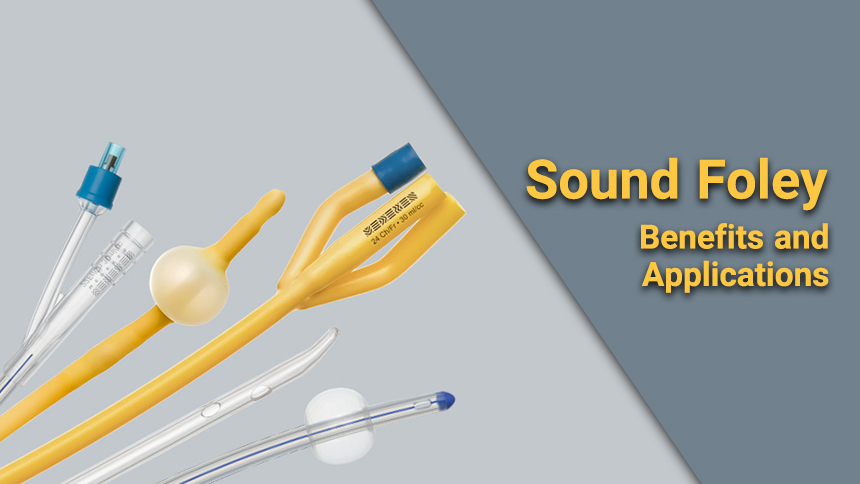
A Foley catheter is a flexible, sterile tube inserted through the urethra into the bladder. At the end of the catheter is a small balloon that is filled with sterile water after the catheter has been fully inserted into the bladder. This balloon prevents accidental removal of the catheter from the bladder and allows it to remain in place for several days or even several weeks.
Foley catheters are commonly manufactured in two-way and three-way versions. The two-way type is used for urine drainage and balloon inflation, while the three-way type provides an additional channel for continuous bladder irrigation and is mainly used in urological surgery.

Uses of Foley Catheters
Foley catheters are used in various medical conditions, the most important of which include:
- Acute or chronic urinary retention
- Urinary tract obstruction
- Benign prostatic hyperplasia
- After urological surgeries
- After certain abdominal and pelvic surgeries
- Accurate monitoring of urine output in patients admitted to the ICU
- Prolonged anesthesia
- Spinal cord injuries
- Patients with paralysis
- Elderly patients who are unable to control urination
- Critically ill patients who cannot frequently use the restroom
- Patients receiving home care
Long-term Foley catheter use may also be unavoidable in some patients with cancer, neurological disorders such as multiple sclerosis and Parkinson’s disease, or individuals with severe spinal injuries.
Benefits of Using a Foley Catheter
Proper use of a Foley catheter offers several benefits, including:
- Complete bladder drainage
- Prevention of kidney damage caused by urinary retention
- Accurate monitoring of urine volume
- Improved patient comfort
- Reduced pressure inside the bladder
- Supporting the recovery process after surgery
- Ability to obtain sterile urine samples
Of course, prolonged use of any type of catheter can increase the risk of infection; therefore, adherence to sterile techniques, proper care, and timely replacement are very important.
How Does the Brand Affect Foley Catheter Performance?
One of the most important factors considered by many healthcare centers is the quality of the manufacturer’s brand. Although all Foley catheters have a similar basic function, differences in the quality of raw materials and the manufacturing process can have a significant impact on their performance and safety.
1) Reduced Risk of Infection
Reputable brands generally use high-quality raw materials and standardized manufacturing processes. A smooth and uniform catheter surface reduces bacterial adhesion and decreases the likelihood of biofilm formation. This can reduce the risk of catheter-associated urinary tract infection, or CAUTI.
2) Greater Patient Comfort
High-quality catheters offer suitable flexibility and create less friction during insertion and while remaining in the urethra. This helps reduce pain, burning, and patient discomfort.
3) Greater Durability
With reputable brands, the likelihood of cracking, tearing, or catheter blockage is lower. This is particularly important for patients who require long-term catheterization.
4) Better Balloon Performance
One of the problems associated with low-quality catheters is balloon rupture or sudden deflation. A standard balloon inflates uniformly and keeps the catheter securely in place.
5) Reduced Urethral Injury
The smooth and polished surface of high-quality catheters reduces friction and lowers the likelihood of urethral injury or bleeding.
6) Better Quality Control
Reputable brands generally manufacture their products in accordance with international standards such as ISO 13485 and medical device safety requirements. These standards ensure that the product meets the necessary requirements for sterility, material quality, and performance.
Characteristics of a Good Foley Catheter Brand
When choosing a suitable brand, it is best to consider the following:
- Sterility of the product
- Intact and undamaged packaging
- Presence of manufacturing and expiration dates
- Traceable batch number (Lot Number)
- Use of medical-grade materials
- Suitable flexibility
- Smooth surface without roughness
- Durable and uniformly inflating balloon
- Valid approvals such as FDA and CE
- Manufactured by a company with a medical device quality management system
Difference Between Silicone-Coated Latex Foley Catheters and 100% Silicone Foley Catheters
One of the most common questions when choosing a Foley catheter is the difference between a silicone-coated latex Foley catheter and a 100% silicone Foley catheter. Although both types are designed to drain urine from the bladder, they differ significantly in terms of material, durability, biocompatibility, and application.
Silicone-Coated Latex Foley Catheter
This type of catheter is made from a natural latex core, with its outer surface coated with a thin layer of silicone. The purpose of this coating is to reduce direct contact between latex and urethral tissue, make the catheter surface smoother, and reduce friction during insertion and removal.
The main advantages of this type of catheter include high flexibility, ease of insertion, and a lower price compared with 100% silicone catheters. For this reason, silicone-coated latex catheters are commonly used in many hospitals for short-term use and after surgical procedures.
However, since the main body of the catheter is still made of latex, it may cause an allergic reaction in individuals with latex sensitivity. In addition, during long-term use, the likelihood of mineral encrustation and biofilm formation on the catheter surface is higher compared with 100% silicone catheters.

100% Silicone Foley Catheter
A 100% silicone catheter is made entirely from medical-grade silicone and contains no latex in its structure. Silicone is a biocompatible material that causes very little reaction with body tissues, making it a more suitable option for patients who require long-term catheter use.
The very smooth surface of silicone reduces bacterial adhesion and mineral deposits, thereby lowering the likelihood of catheter blockage. In addition, in many 100% silicone models, the catheter’s internal diameter is larger than that of a latex catheter with the same external size, which can improve urine drainage.
Another important advantage of this type of catheter is the absence of latex; therefore, it is considered a safer choice for patients with latex sensitivity or allergy. Its only disadvantage is its higher price compared with silicone-coated latex catheters.

Comparison of Silicone-Coated Latex and 100% Silicone Foley Catheters
| Feature | Silicone-Coated Latex | 100% Silicone |
| Main Material | Latex with silicone coating | 100% medical-grade silicone |
| Risk of Allergy | Present (due to the latex core) | Very low |
| Suitable for Short-Term Use | Highly suitable | Suitable |
| Suitable for Long-Term Use | Usable, but more limited | Highly suitable |
| Resistance to Encrustation | Good | Very good |
| Risk of Blockage | Higher | Lower |
| Biocompatibility | Good | Excellent |
| Internal Catheter Diameter | Smaller | Usually larger |
| Price | More economical | More expensive |
Which Option Is Better?
If the patient only requires a catheter for a few days and has no history of latex sensitivity, a silicone-coated latex catheter is a suitable choice because of its reasonable price and high flexibility.
However, for patients who need the catheter to remain in place for a long period, have a history of latex allergy, or are prone to mineral encrustation and catheter blockage, a 100% silicone catheter is a more suitable option. Due to its greater biocompatibility, lower risk of allergic reactions, higher resistance to encrustation, and better performance during long-term use, this type of catheter is preferred in many clinical guidelines for patients requiring long-term catheterization.
References
Centers for Disease Control and Prevention (CDC). Guideline for Prevention of Catheter-Associated Urinary Tract Infections (CAUTI)
European Association of Urology (EAU). Guidelines on Urological Infections
National Institute for Health and Care Excellence (NICE). Healthcare-associated infections: prevention and control
World Health Organization (WHO). Infection Prevention and Control Guidelines
Society of Urologic Nurses and Associates (SUNA). Clinical Practice Guidelines for Urinary Catheterization
Leave a Comment
We appreciate you sharing your feedback and helping us continuously improve the quality of our services.
* Your email address will only be used to respond to you and will not be published.