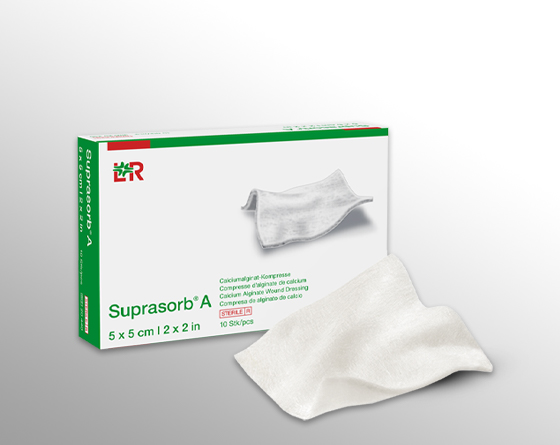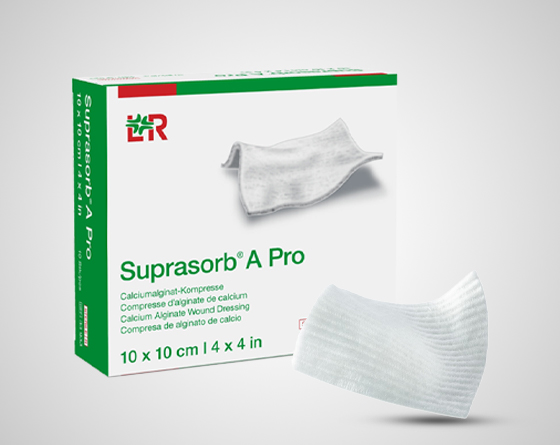
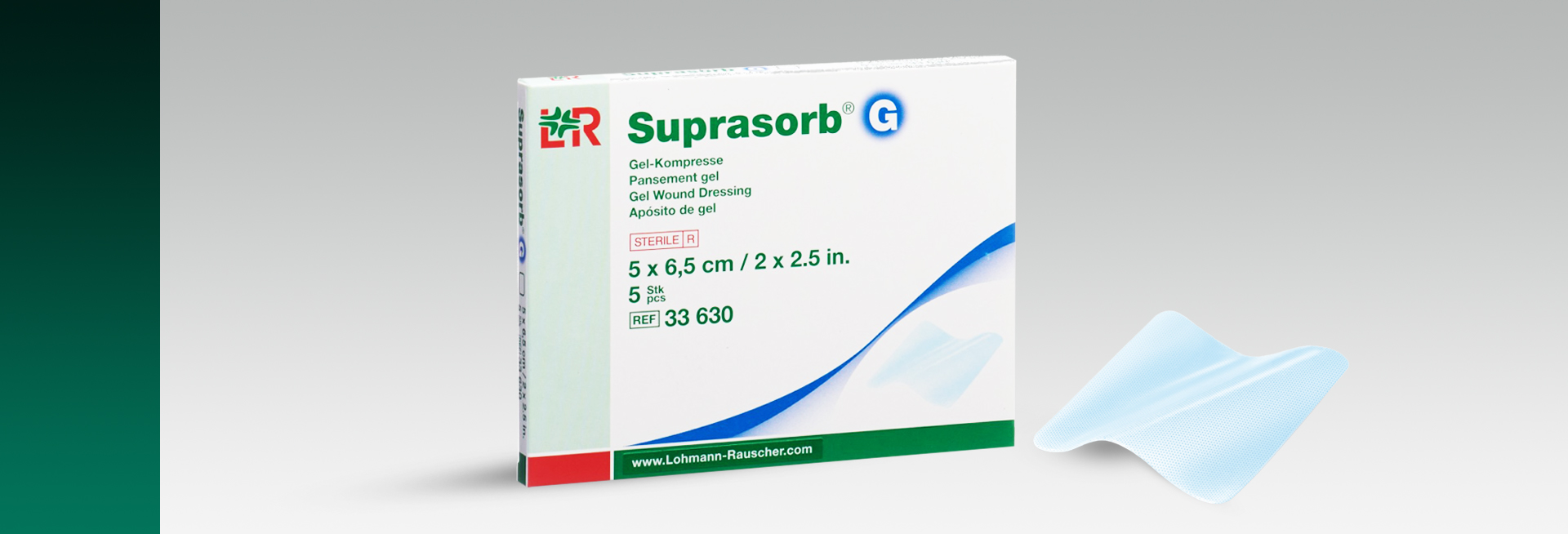


1- Remove the sterile Suprasorb G dressing from its packaging.
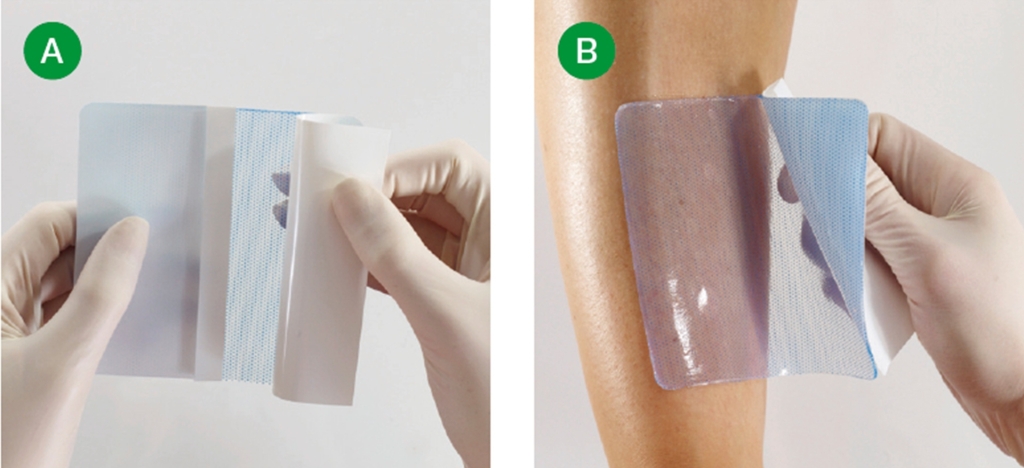
2- Remove one of the two white release liners from the dressing adhesive (A).
3- Place the dressing on the wound and remove the second white release liner from the dressing adhesive (B).
4- Over the Suprasorb G gel dressing, use a suitable film dressing such as Suprasorb F film dressing together with an elastic bandage such as Mollelast or a compression bandage such as Rosidal.
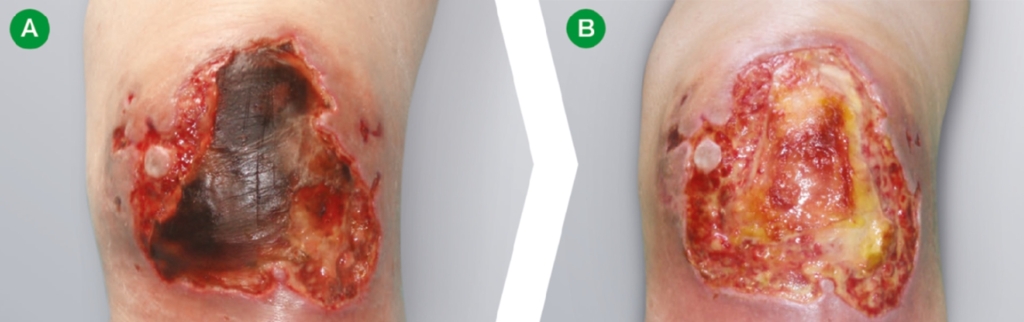
Patient 1 – Tissue injury caused by a fall
Day 5: Necrotic tissue had decreased, initial granulation had occurred, and a film dressing was used as a secondary dressing (A).
Day 9: Complete debridement of the necrotic tissue had been achieved. Dressing changes were performed easily and without causing pain, and after dressing application the patient was able to move the affected limb freely without restriction (B).
Patient 2 – Necrotic extravasation injury in a newborn
Initial autolytic debridement was performed and pain intensity decreased (A).
Complete wound debridement was achieved and epithelial tissue regrowth was observed (B).

Care of dry wounds and wounds with low levels of exudate.
Acute or chronic superficial wounds:
Wound healing phases:

Product Catalogue
Complete information about its technical specifications, specialized features, and applications