
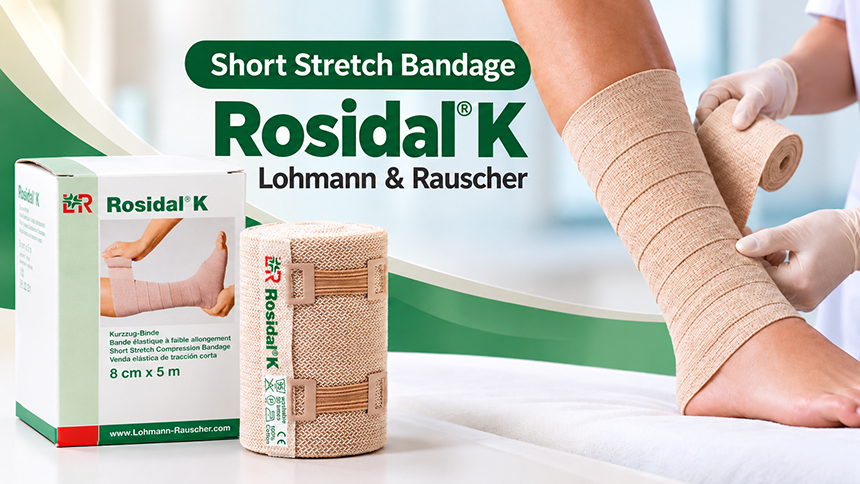
Lohmann & Rauscher Rosidal K Short-Stretch Elastic Bandage
Chronic leg swelling, venous insufficiency, and impaired lymphatic drainage can make everyday activities more difficult and reduce quality of life. In these situations, compression therapy is one of the key tools in patient care. However, not all elastic bandages provide the same level or type of pressure. Rosidal K, a specialized short-stretch bandage from Lohmann & Rauscher, is designed to provide effective working pressure during muscle activity while maintaining relatively lower resting pressure. In this guide, we will explore the product’s actual features, applications, and limitations in simple, accessible language. It is important to note that the appropriate compression level and bandaging technique must be determined through clinical assessment.
Get to Know Lohmann & Rauscher and the Rosidal K Product
Lohmann & Rauscher (L&R) is a manufacturer of medical products and wound care dressings. Rosidal K is one of the brand’s short-stretch compression bandages, used in the management of venous and lymphatic disorders. The product is supplied as a cream-colored textile bandage made from 100% cotton. Its specialized weave helps the bandage layers stay in place and reduces the likelihood of slippage. In addition to compression therapy, the manufacturer also indicates supportive applications in certain sports injuries and traumatology care. However, its use in sports medicine does not mean it is suitable for every type of sprain or injury.

What Exactly Is a Short-Stretch Bandage?
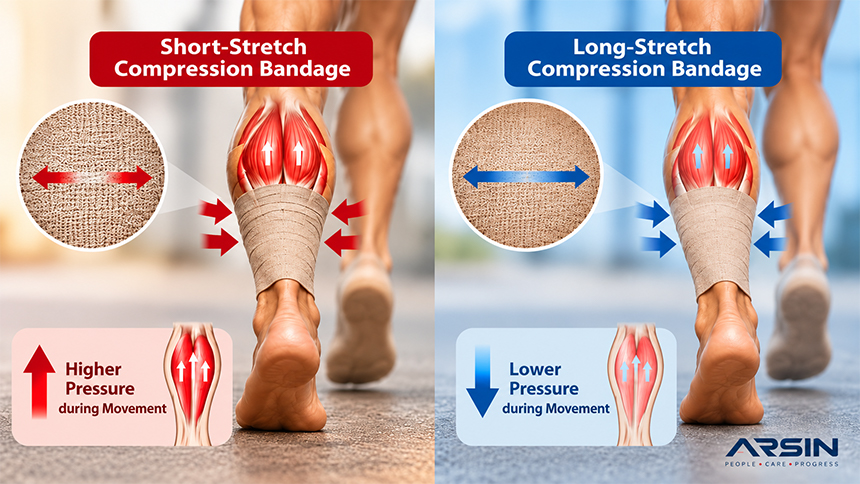
The term “short-stretch” refers to the bandage’s mechanical properties, not the length of the roll. Compared with long-stretch bandages, short-stretch bandages offer greater resistance to muscle expansion during movement. As a result, they generate higher working pressure during walking and muscle contraction, while resting pressure generally remains lower. This characteristic can help support the calf muscle pump. According to the product specifications, Rosidal K by Lohmann & Rauscher has a longitudinal extensibility of approximately 90%. Therefore, it should not be considered completely inelastic. The final pressure depends on several factors, including the tension applied during bandaging, the number of layers, the degree of overlap, the circumference of the limb, and the underlying padding layers.
Working Pressure and Resting Pressure: A Key Difference
To understand how the bandage works, consider the calf during walking: the muscles contract, temporarily changing the circumference of the lower leg. A short-stretch bandage resists this expansion, increasing the working pressure. When sitting or lying down, muscle activity decreases, and resting pressure is generally lower. This difference is one of the reasons Rosidal K by Lohmann & Rauscher is used in clinical compression therapy. However, relatively low resting pressure does not automatically mean that wearing the bandage overnight is safe for every patient. The duration of wear, whether the bandage needs to be reapplied, and the level of supervision required should be determined by the treating healthcare team.
Application 1: Chronic Venous Insufficiency and Varicose Veins
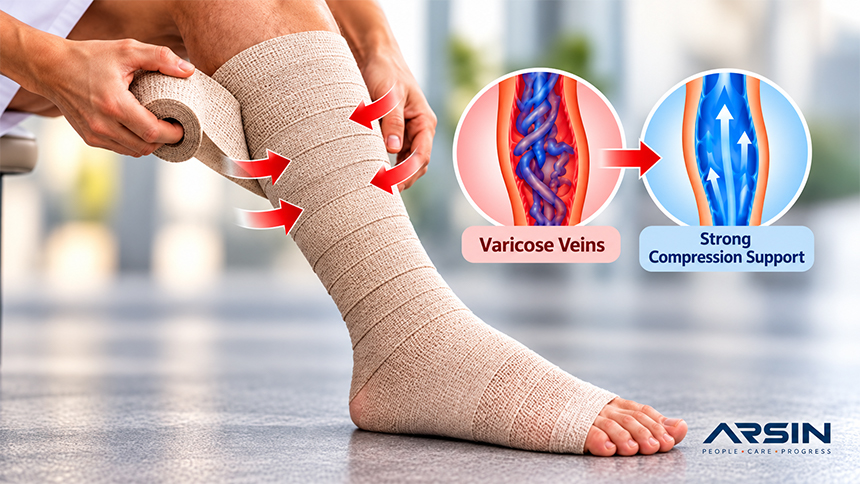
When blood does not return efficiently from the legs to the heart, symptoms such as heaviness, swelling, and skin changes may develop. Appropriate compression therapy can help manage these symptoms by supporting venous return. Rosidal K by Lohmann & Rauscher is used in high-compression bandaging for venous disorders. However, mild varicose veins, sudden one-sided leg swelling, and open wounds are not the same condition. The underlying cause of the symptoms must be identified, arterial circulation assessed, and the appropriate compression system selected before treatment begins.
Application 2: Lymphedema and Chronic Edema
Lymphedema occurs when lymphatic fluid cannot drain properly from the tissues. Treatment is usually multifaceted and may include skin care, therapeutic exercise, specialized lymphatic drainage, and compression bandaging. Rosidal K by Lohmann & Rauscher can be part of a treatment program aimed at reducing limb volume during the intensive treatment phase. However, the bandage alone cannot eliminate the underlying cause of lymphedema. Treatment outcomes depend on adherence to the prescribed care plan, physical activity, appropriate padding, and regular monitoring of limb measurements. Professional instruction in bandaging is particularly important for patients with advanced lymphedema.
Application 3: Venous Leg Ulcers
In the management of venous leg ulcers, compression therapy is considered a key component of treatment when arterial blood supply is adequate. A short-stretch bandage may be used as part of a multilayer compression system alongside an appropriate wound dressing. However, not all leg ulcers are venous in origin. Arterial, diabetic, and infected ulcers require different assessments and management approaches. Applying excessive compression without supervision to an ulcer with poor arterial blood supply can cause tissue damage. Therefore, identifying the underlying cause of the ulcer and assessing the ankle-brachial pressure index (ABPI) before initiating compression therapy are essential.
Rosidal K Technical Specifications at a Glance
According to Lohmann & Rauscher’s official information, Rosidal K is made of 100% cotton, is cream-colored, and has approximately 90% longitudinal extensibility. The bandage is breathable and features a textured weave that helps keep the bandage layers in place. It is washable and reusable, and the manufacturer specifies up to 50 wash cycles when care instructions are followed. The stated maximum washing temperature is 95°C (203°F); however, the label on the purchased product should always be checked. Available dimensions may vary by market.

What Size of Lohmann & Rauscher Rosidal K Bandage Is Right for You?
Common widths for this product in some markets are 6, 8, 10, and 12 cm, and the roll is typically 5 meters long when stretched. Choosing the width is not simply a matter of personal preference; limb size, the target area, bandaging technique, and the number of layers required all play a role. A narrower bandage may be suitable for smaller areas, while covering a larger calf or thigh may require a different width or length. To ensure the correct choice, ask your healthcare professional to determine the appropriate size and number of rolls needed, and check the product code and dimensions printed on the packaging before purchasing.
The Role of Underbandage Padding in Pressure Distribution
Compression bandaging involves more than simply wrapping a roll around the leg. Bony prominences around the ankle, the front of the shin, and areas with irregular contours may be exposed to higher localized pressure. Appropriate padding can help protect the skin and distribute pressure more evenly. Lohmann & Rauscher also offers complementary padding products as part of its compression therapy solutions. In some protocols, a short-stretch bandage is applied over a protective layer and padding. The type and thickness of the padding should be determined by a trained healthcare professional, as improper padding can also result in inappropriate pressure.
Safe Use Principles: Not a DIY Bandaging Guide
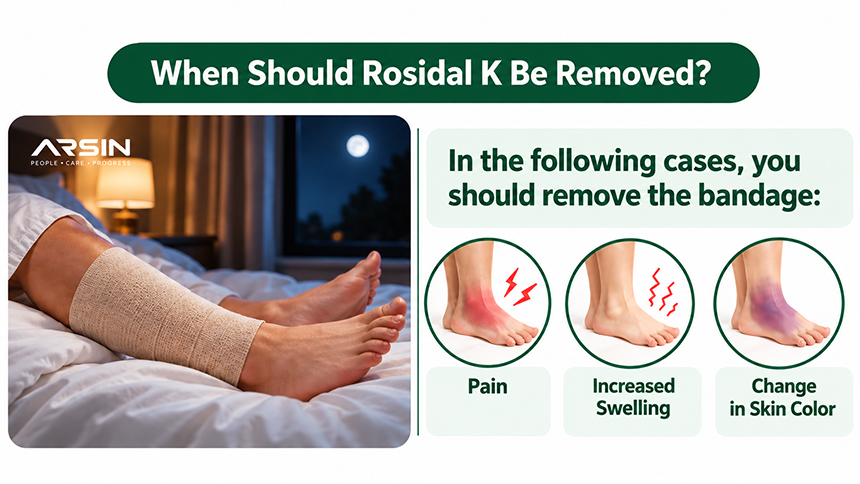
Before the first use, a physician or therapist should assess the cause of the swelling, skin condition, foot pulses, and, when indicated, the ankle-brachial pressure index (ABPI). Bandaging should then be taught according to the treatment goal, including the appropriate tension, wrapping direction, overlap, and number of layers. After application, the color and temperature of the toes, foot sensation, and the patient’s comfort should be checked. New pain, numbness, a cold foot, or changes in toe color are warning signs that require immediate removal of the bandage and prompt medical assessment. The bandage should not be left twisted into a cord, wrinkled, or gathered into tight edges against the skin.
Who Should Use Compression Bandages With Extra Caution?
In people with peripheral arterial disease, severe heart failure, diabetic neuropathy, impaired sensation, certain skin conditions, or complex vascular disorders, decisions about compression therapy require extra caution. The official UK product page states that Rosidal K is contraindicated when the ankle-brachial pressure index (ABPI) is below 0.5 and that use in the range of 0.5 to 0.8 should only be considered under specialist supervision. An ABPI above 1.3 may also require further assessment. These figures do not replace a medical evaluation, and guidelines may vary depending on the type of bandage and the severity of the condition.

Rosidal K vs. a Standard Elastic Bandage: Key Differences
A standard elastic bandage may be designed to secure dressings or provide short-term support, whereas Rosidal K is a specialized product intended to deliver controlled therapeutic compression as part of a defined treatment plan. Another important difference is its pressure profile during activity and rest. However, simply being labeled “short-stretch” does not guarantee that the final compression pressure will be appropriate. The bandager’s skill, limb size, and use of padding can all affect the outcome. Therefore, comparing the price per roll alone—without considering the intended application and reusability—does not provide a complete picture of the product’s value.
Benefits of 100% Cotton and Reusability
The 100% cotton composition of Rosidal K helps promote breathability and comfort against the skin. Its fabric texture is designed to help keep the bandage layers in place, while its washability is an important advantage for long-term use. When the bandage is washed and dried according to the care instructions, reusability can reduce the cost per application. However, its actual lifespan depends on washing practices, the condition of the fibers, and whether the bandage retains its performance. If the bandage becomes misshapen or worn, or loses its original elasticity and structure, consult a healthcare professional about whether it should be replaced.
How to Wash and Care for the Rosidal K Bandage
According to the manufacturer’s care instructions, the bandage can be washed with a mild detergent using a delicate laundry cycle, and up to 50 wash cycles are specified. The use of bleach and fabric softener is not recommended. Before washing, check the instructions on the packaging of your specific product version, and avoid drying or ironing it in ways that conflict with those instructions. Roll the clean, completely dry bandage neatly and store it in a dry place. Proper washing is not just a matter of hygiene; preserving the quality of the fibers also helps the bandage perform more consistently during subsequent uses.
Can Rosidal K Be Worn Overnight?
Lohmann & Rauscher highlights the lower resting pressure of Rosidal K and describes its potential use during periods of rest. However, the duration of use must be determined individually for each patient. Vascular status, the severity of swelling, the number of bandage layers, and the risk of the bandage slipping all matter. If your healthcare team has instructed you to wear the bandage overnight, follow their specific guidance. Otherwise, avoid deciding on your own to sleep while wearing a compression bandage. Pain, tingling, or changes in foot color at any time require immediate attention.
Common Mistakes When Buying and Using Rosidal K
One common mistake is choosing a product based solely on the term “elastic bandage,” since short-stretch and long-stretch bandages do not perform in the same way. Another misconception is that pulling the bandage tighter always produces better results. Excessive pressure can be dangerous. Some people also use compression bandages for any type of swelling or wound without first assessing arterial circulation. Other important mistakes include using a damaged roll, omitting necessary padding, and ignoring warning signs. Making an informed purchase means considering product authenticity, technical specifications, and the appropriateness of the prescribed treatment.
How to Verify Authenticity and Product Specifications Before Buying
When purchasing Lohmann & Rauscher Rosidal K, check the exact product name, width and length, product reference number (REF), manufacturer information, and the condition of the packaging. The details on the packaging should match the requirements of your prescription or your healthcare professional’s recommendations. Keep in mind that products in the Rosidal range are not identical. For example, Rosidal haft and Rosidal soft differ from Rosidal K in their materials and therapeutic roles. It is best to purchase the product from a reputable medical-supply provider. If you have concerns about authenticity or the product code, compare the information with the manufacturer’s official catalogue.
FAQ About Lohmann & Rauscher Rosidal K
- Is Rosidal K suitable for everyone with varicose veins? No. The severity of the condition, vascular status, and treatment goals should be assessed before use.
- Can the bandage be reused? Yes. According to the manufacturer’s specifications, it can withstand up to 50 wash cycles when the care instructions are followed.
- Does this product contain latex? According to the official information, neither the bandage nor its clips are made from natural latex.
- Can Rosidal K treat lymphedema on its own? No. It is generally used as part of a comprehensive treatment plan.
- Does applying greater pressure produce better results? Not necessarily. Inappropriate pressure can damage the skin or nerves and impair circulation.
References
lohmann-rauscher.com/us-en/products/compression-therapy/bandages/short-stretch-bandages/rosidal-k-short-stretch-bandage/
pmc.ncbi.nlm.nih.gov/articles/PMC7383414/
https://onlinelibrary.wiley.com/doi/full/10.1111/ddg.15415
Leave a Comment
We appreciate you sharing your feedback and helping us continuously improve the quality of our services.
* Your email address will only be used to respond to you and will not be published.